Michael Larionov
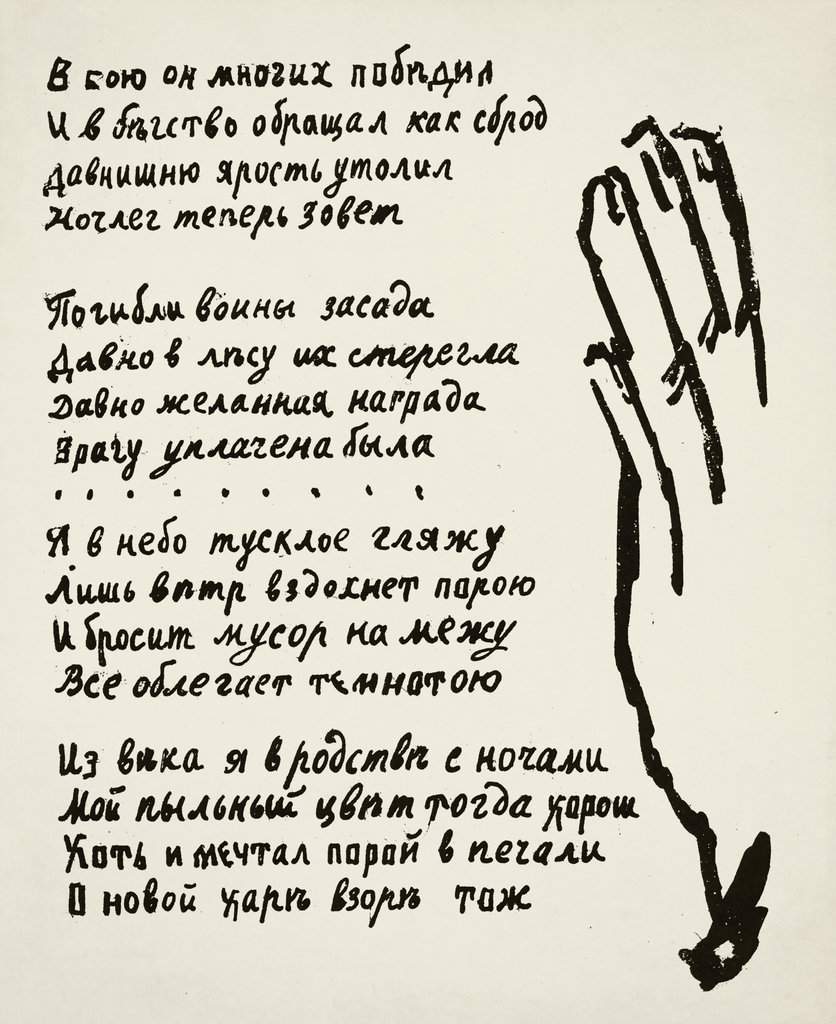
Russia (1881—1964)Mikhail Larionov was born in Tiraspol, in present-day Moldova, in 1881 and moved to Moscow as a child, where he studied at the School of Painting, Sculpture and Architecture. After experimenting with Impressionism, he developed an interest in Post-Impressionism and Fauvism before becoming a leading figure in Russian Neo-Primitivism. In 1910 he co-founded Bubnovyi Valet (Jack of Diamonds) and, in 1912, established the more radical group Oslinyi Khvost (Donkey’s Tail). Around the same time, together with Natalia Goncharova, he developed Rayonism, an abstract approach informed by Cubism and Futurism, which he expounded in three manifestos. In 1915 he left Russia and began collaborating with Sergei Diaghilev’s Ballets Russes, designing sets and costumes. He settled in Paris in 1919, continuing to work as a painter, illustrator and theatre designer. In 1923 he contributed a lithograph to the fourth portfolio of the Bauhaus series Neue Europäische Graphik and illustrated Vladimir Mayakovsky’s poem The Sun. After Diaghilev’s death in 1929, Larionov devoted himself more intensively to figurative painting while continuing his work for the theatre. He died in Fontenay-aux-Roses, France, in 1964.