René Magritte
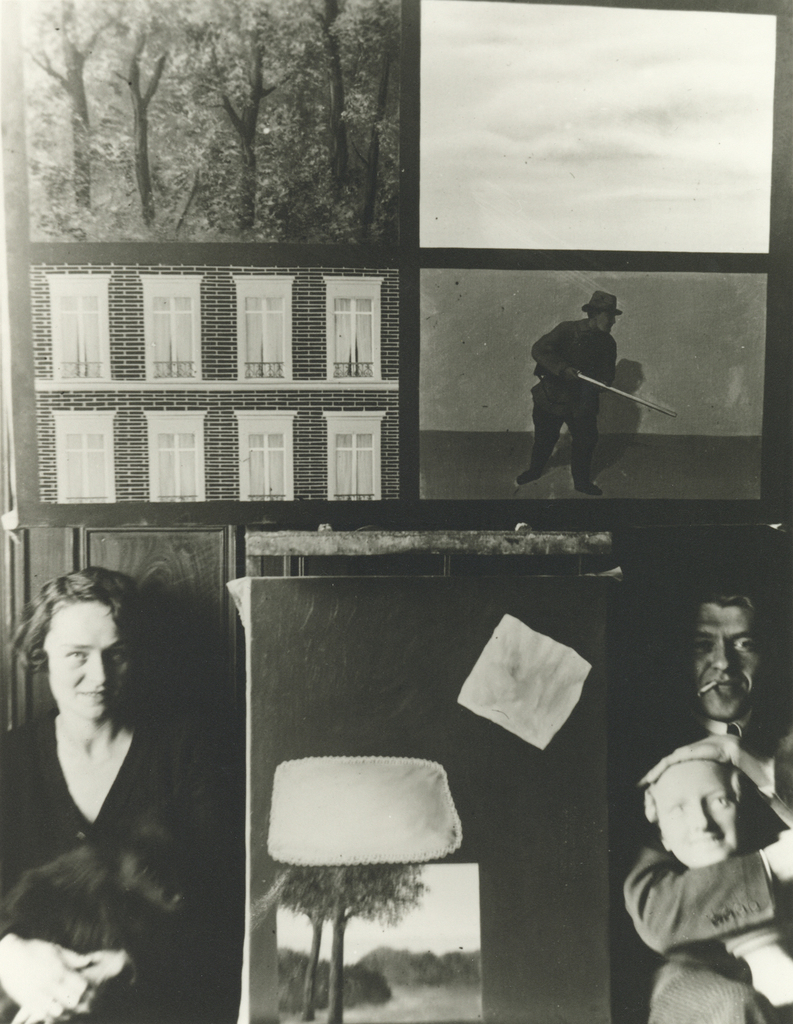
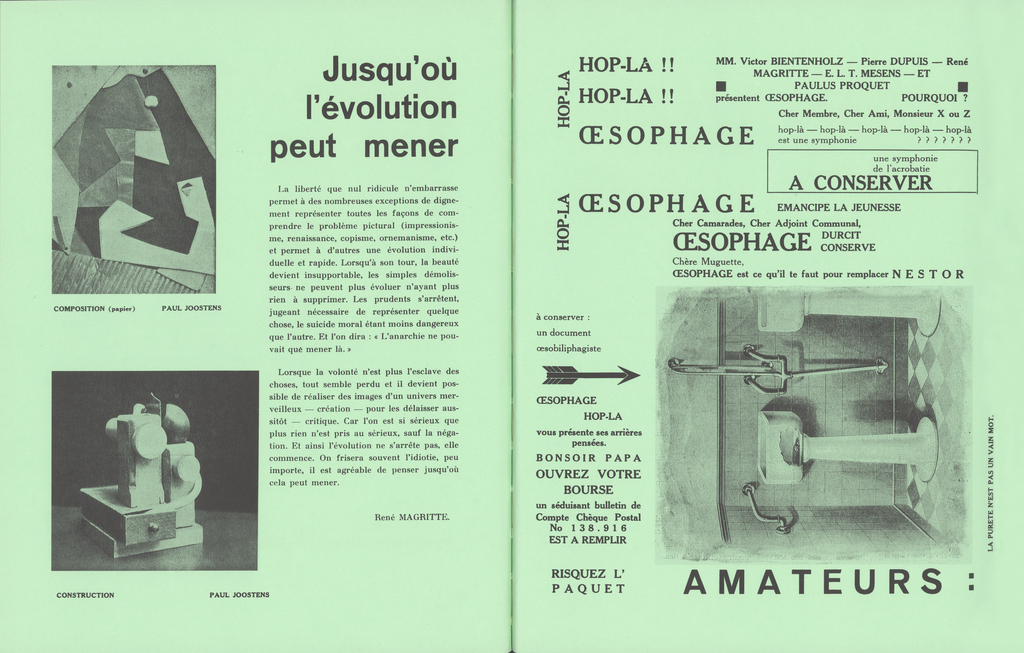
Belgium (1898—1967)René Magritte began painting in 1915 and studied at the Académie Royale des Beaux-Arts in Brussels. After an early phase influenced by Cubism and Futurism, he turned to Surrealism, inspired by the work of Giorgio de Chirico. In 1927 he moved to Paris, where he came into contact with André Breton’s circle, before returning to Brussels in 1930 and resuming his work in advertising. During the Second World War, he developed a more luminous style, known as his Renoir period, followed by the Vache period, characterised by vivid colours and grotesque imagery. In 1946 he published Manifeste pour un Surréalisme en plein soleil, challenging Breton’s approach to Surrealism. Together with his brother Paul and Marcel Mariën, he also produced forged paintings and banknotes. His work explored the relationship between reality and representation by placing everyday objects in unexpected contexts.