Wassily Kandinsky
Russia (1866—1944)Born in Moscow and raised in Odessa, Wassily Kandinsky developed an early sensitivity to colour. After studying law and economics at the University of Moscow and pursuing an academic career, he moved to Munich in 1896, at the age of thirty, to study painting, first with Anton Ažbe and later at the Academy of Fine Arts. His encounter with Monet’s Les Meules, Wagner’s opera Lohengrin and the theosophical writings of Helena Blavatsky helped shape his understanding of art as an expression of inner and spiritual experience. Around the turn of the century, he began developing a visual language based on the expressive possibilities of colour and form. In 1911, together with Franz Marc and other artists, he founded the group Der Blaue Reiter and prepared its almanac, published in 1912. The outbreak of the First World War prevented the planned continuation of the publication. In 1911 he also published Über das Geistige in der Kunst, setting out his ideas on the spiritual dimension of art. In 1913, one of his works was exhibited at the London Salon of the Allied Artists’ Association at the Royal Albert Hall. Invited by Walter Gropius, Kandinsky joined the Bauhaus in Weimar in 1922, where he taught in the preliminary course and developed classes on form and colour theory.




Anthologie Dada
Bauhaus
Cabaret Voltaire
Carnet de dessins
Cercle et carré
Dada 2
De Driehoek
Judgement day
Minotaure
Small worlds I
Small worlds II
Small worlds III
Small worlds IV
Small worlds IX
Small worlds V
Small worlds VI
Small worlds VII
Small worlds VIII
Small worlds X
Small worlds XI
Small worlds XII
Sounds
Staatliches Bauhaus in Weimar 1919-1923
Verve
Zenit
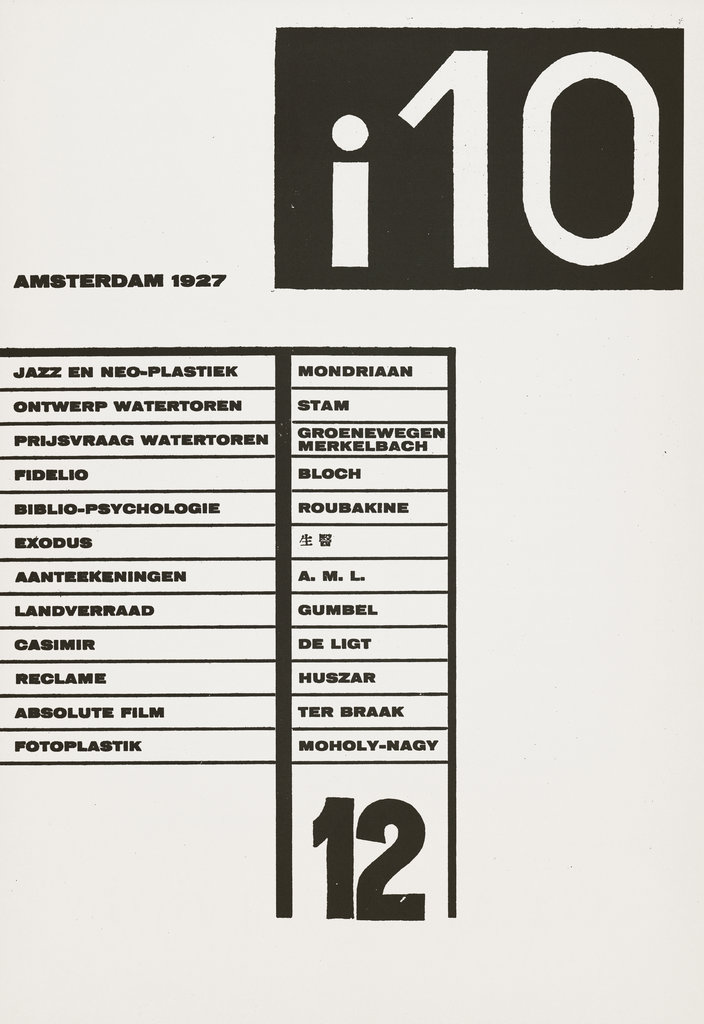
i10